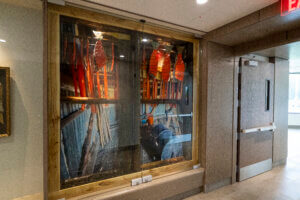
 Visitors to Chief Andrew Isaac Health Center can now experience two new art installations that celebrate the enduring relationship between Interior Alaska Native people, salmon, and the traditions that have sustained generations. Created by Rampart artist Ramy Brooks, the installations invite patients, families, and staff to reflect on the cultural significance of fishing, family, and stewardship.
Brooks grew up along the Yukon River in Rampart and at fish camp, where he learned traditional ways of hunting, fishing, trapping, dog mushing, and gathering from his Elders and family. Although he once dreamed of attending art school, he instead joined the U.S. Navy before eventually returning home. After competing for years in the Iditarod and Yukon Quest, Brooks earned bachelor’s degrees in Geological Engineering and Geology from the University of Alaska Fairbanks. Today, he combines his traditional upbringing with his academic understanding of the land to create artwork that tells the stories of his culture and heritage.
Installed in the Cultural Gallery, “Tending to Salmon in the Smokehouse” recreates the atmosphere of a traditional Yukon River smokehouse. Sculpted salmon made from moose antler features copper tails, textured scales, and epoxy finishes that capture the rich appearance of drying king salmon. Weathered driftwood, salvaged tin, Yukon River beach rocks, and an old fishing net complete the installation, transporting viewers to a familiar place where generations have gathered to prepare food for the winter.
Located between Buildings A and B, “Starting the Fire” expands on the story by depicting the beginning of the daily smokehouse routine. Alongside the antlers, salmon and traditional smokehouse materials, the installation features a smoke barrel with glowing flames inside. The depiction represents the careful process of creating the cottonwood smoke used to preserve salmon.
For Brooks, the installations represent much more than the act of preparing food. They honor the lessons learned at fish camp: working together as families, passing knowledge from one generation to the next, developing responsibility and strong work ethic, and caring for the land and its resources. The displays serve as a reminder that salmon are deeply woven into the identity, culture, and well-being of Interior Alaska Native people.
The artwork also carries an important message about the future. As Yukon River salmon populations continue to face significant challenges, Brooks hopes the installations inspire conversations about protecting the fishery and preserving traditional knowledge for future generations. Brooks shares, “Through action now it is my hope that this display is not just a memory, but a vision of what our future could look like.”
The installations are now on display at the Chief Andrew Isaac Health Center, where they offer patients, visitors, and staff an opportunity to connect with the cultural traditions that continue to shape the communities TCC serves.