
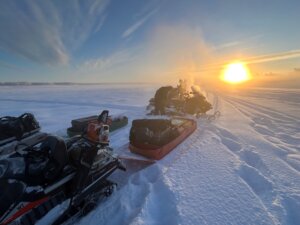
 TCC Public Safety officers traveled the Yukon River by snowmachine this winter to connect with communities, provide safety education, and strengthen emergency response across the region.
This February, officers from the Tanana Chiefs Conference Public Safety Department completed a 675-mile snowmachine trip across the Interior, visiting nine Yukon River communities while delivering public safety education and strengthening relationships with residents.
The trip served several purposes. Officers visited villages to connect directly with community members, provide safety education to students and families, and maintain a visible public safety presence during the winter travel season. At the same time, the journey provided advanced snowmachine training for newer officers as part of the rollout of TCC’s new Regional Rover Program.
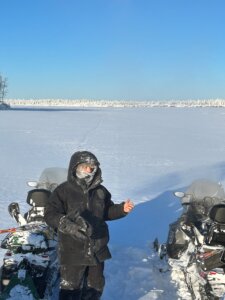 Traveling long distances by snowmachine across remote country is a reality for many of the communities we serve. This trip allowed our officers to experience the same conditions our residents face every winter while also strengthening the skills needed to safely respond to emergencies in rural Alaska.
The trip began with five officers traveling to Circle before departing by snowmachine to Fort Yukon. Along the way, officers encountered real-world trail conditions including overflow, open water, and deep snow off trail. These situations provided valuable opportunities for officers to practice recovery techniques and teamwork while navigating challenging terrain.
From Fort Yukon, teams traveled to Birch Creek and Chalkyitsik where officers visited with residents and checked on the partially constructed VPSO house in Chalkyitsik. These visits allow officers to maintain connections with the communities they serve and better understand local needs and concerns.
The team continued on to Beaver where officers joined students, parents, and school staff for breakfast and later provided fire prevention education for students. Community safety education is a core part of the Public Safety program, and these visits give young people the opportunity to learn important safety practices while building positive relationships with officers.
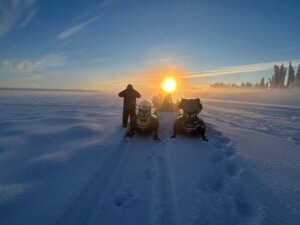 Travel then continued to Stevens Village where officers met with tribal leadership and discussed future opportunities for fire prevention training, fire extinguisher use, and support for developing local Search and Rescue and EMS response capacity.
During the visit to Rampart, officers provided both fire prevention and gun safety education for students at the school. These discussions help ensure youth have the knowledge they need to stay safe while living and traveling in rural Alaska.
Throughout the trip, officers experienced extremely cold temperatures and difficult travel conditions including jumbled river ice and heavy trail conditions. These experiences are critical training opportunities, helping officers build the skills and confidence needed to safely respond to emergencies across the region.
After traveling through Manley Hot Springs, the team concluded the trip in Nenana when worsening river overflow conditions and an approaching snowstorm made further travel unsafe.
In total, the team traveled approximately 675 miles by snowmachine and successfully visited nine of the ten planned communities. Officers delivered public safety education in several villages and spent time meeting with community members, students, and local leadership along the way.
Trips like this highlight the unique challenges of providing public safety services across such a large and remote region. They also demonstrate the commitment of TCC Public Safety officers to staying connected with the communities they serve.
By traveling village to village, sharing safety information, and building relationships with residents and tribal leaders, our officers continue working to strengthen community safety throughout the TCC region.